
Top Personal Injury Claims in Florida: What You Should Know
An injury can happen in seconds. The consequences can last for months—or even years.
If you have been hurt because of someone else's actions or negligence, you may have the right to pursue compensation for your injuries and losses. But personal injury law covers many different situations, and the rules can vary depending on how the injury occurred.
From car crashes to dog bites and serious brain injuries, understanding the most common types of personal injury claims can help you recognize when it may be time to seek legal advice.
Personal Injury Claims in Florida
Here are some of the personal injury claims you should know about in Florida.

1. Car Accident Claims
Car accidents are among the most common situations that can lead to personal injury claims.
A crash caused by distracted driving, speeding, impaired driving, running a red light, or another form of negligence can leave victims dealing with medical bills, lost income, vehicle damage, pain, and other losses.
Car accident claims can become particularly complicated when drivers disagree about who was at fault or when insurance coverage is insufficient to cover the victim's losses.
Evidence such as crash reports, photographs, witness statements, medical records, and vehicle damage can play an important role in establishing what happened.
Were you involved in an accident with another type of vehicle? You can also check: Truck Accident, Motorcycle Accident, Bicycle Accident, Pedestrian Accident.
2. Uber and Lyft Accident Claims
Rideshare accidents can be more complicated than ordinary car accident claims because multiple insurance policies and parties may potentially be involved.
The circumstances of the accident matter, including whether the rideshare driver was waiting for a passenger, traveling to pick someone up, or actively transporting a passenger.
If you were injured as a passenger, another driver, or someone involved in a collision with a rideshare vehicle, determining which insurance coverage applies can require a careful examination of the facts.
3. Dog Bite Claims
Florida has specific laws addressing injuries caused by dogs.
Under Florida Statutes § 767.04, a dog owner can be liable when their dog bites a person who is in a public place or lawfully on private property, regardless of whether the owner knew the dog had previously shown vicious tendencies. The statute also addresses situations involving the injured person's negligence.
Dog bite injuries can include puncture wounds, scarring, nerve damage, infections, fractures, and psychological trauma.
If you were bitten, seek medical attention and document the injury as soon as possible.
4. Brain Injury Claims
A traumatic brain injury can be one of the most serious consequences of an accident.
Brain injuries can result from car crashes, falls, sports-related incidents, and other traumatic events. Some are immediately apparent. Others may initially appear minor while symptoms develop over time.
Depending on the circumstances, a brain injury claim may involve compensation for medical treatment, rehabilitation, lost income, reduced earning capacity, pain and suffering, and other losses.
Because the consequences of a brain injury may extend far into the future, understanding the full impact of the injury is particularly important when evaluating a claim.
5. Wrongful Death Claims
Some personal injury cases have the most devastating possible outcome: the victim does not survive.
When a person's death is caused by another person's wrongful act, negligence, or default, Florida's
Wrongful Death Act provides a legal framework for claims brought by the decedent's personal representative for the benefit of eligible survivors and the estate.
Wrongful death cases can involve complex questions about liability and damages, while families may simultaneously be dealing with grief and significant financial consequences.
These cases require particularly careful legal guidance.
6. Premises Liability Claims
Property owners and occupiers may have legal responsibilities regarding dangerous conditions on their property.
Premises liability claims can arise from situations such as unsafe walkways, hazardous conditions, inadequate maintenance, or other dangerous property conditions.
However, simply being injured on someone else's property does not automatically mean the property owner is legally responsible.
The circumstances surrounding the condition, notice of the danger, the property owner's responsibilities, and the cause of the injury can all matter.
7. Serious Injury Claims
Some accidents result in injuries that fundamentally change a person's life.
Spinal cord injuries, traumatic brain injuries, severe fractures, permanent disabilities, and other catastrophic injuries can require extensive medical care and rehabilitation.
These claims often involve much more than immediate medical expenses.
Future treatment, lost earning capacity, long-term care, physical limitations, and the effect of the injury on a person's quality of life may all need to be considered.
What Do Personal Injury Claims Have in Common?
Although the circumstances can vary dramatically, many personal injury claims involve the same fundamental questions:
Who was responsible?
What evidence proves what happened?
What injuries and losses resulted?
What insurance coverage is available?
What compensation may be legally available?
Answering those questions requires more than simply determining who appears to be at fault.
Florida's civil jury instructions recognize negligence as involving questions such as duty, breach, causation, and harm.
That is why a seemingly straightforward accident can become complicated once an insurance company disputes responsibility or the full extent of the victim's losses.
What Compensation Could a Personal Injury Claim Include?
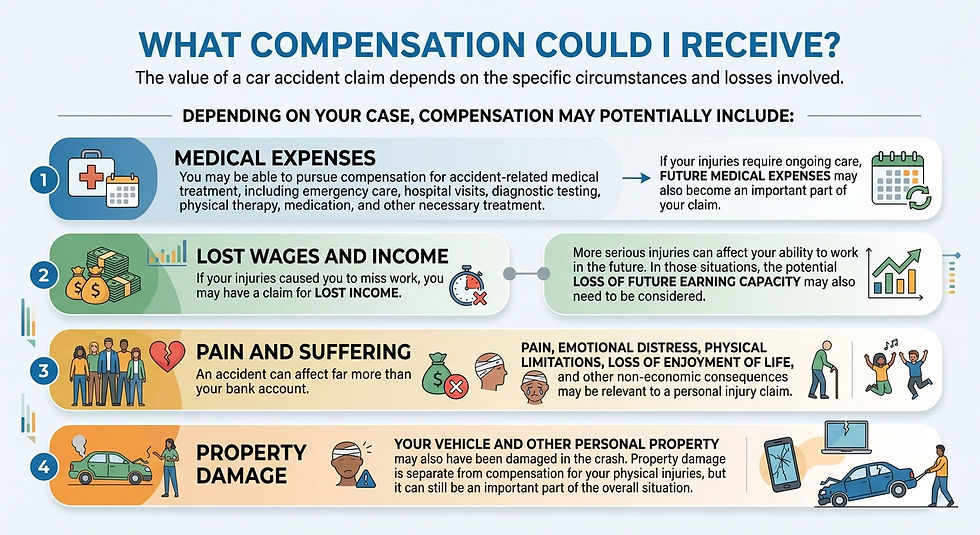
Depending on the circumstances, compensation may potentially include economic and non-economic damages.
Economic losses can include medical expenses, lost wages, property damage, and certain future financial losses.
Non-economic damages may include pain and suffering, emotional distress, physical limitations, and loss of enjoyment of life.
The damages available depend on the specific facts and applicable Florida law.
Importantly, the value of a claim should not be based solely on the amount of the first insurance offer.
When Should You Talk to a Personal Injury Lawyer?
You do not necessarily need a lawyer for every minor accident.
But speaking with an experienced personal injury attorney may be particularly important when:
Your injuries are serious or permanent.
Fault is disputed.
Multiple people or vehicles were involved.
The insurance company denies your claim.
The insurance coverage is unclear or insufficient.
You cannot return to work.
You may need significant future medical treatment.
A loved one died because of an accident.
An attorney can evaluate the facts, explain your legal options, communicate with insurance companies, and help determine what evidence may be needed to support your claim.
The Right Legal Guidance Can Make a Difference
A personal injury claim is about more than an accident. It is about the consequences that follow.
At Hamblen Injury Law, Chris Hamblen brings more than 15 years of personal injury litigation experience to clients throughout Clearwater, Tampa, St. Petersburg, Pinellas County, and Hillsborough County.
He represents clients dealing with serious injuries caused by car accidents, rideshare accidents, dog bites, brain injuries, and other personal injury situations.
With deep litigation experience, Chris understands that building a strong case means looking beyond the initial accident—examining the evidence, understanding the insurance issues, identifying the full impact of the injury, and anticipating the challenges that may come next.
If you were injured because of someone else's negligence, talk directly with Chris Hamblen. Your consultation is free, and you pay no fee unless we win.


